Clog & slow-drain troubleshooting
Garbage Disposal Not Draining (Clog Fix Guide)
If your garbage disposal is not draining, the problem is usually a clog in the disposal chamber, the discharge pipe, or the P-trap under the sink. This quick guide walks you through the exact steps to clear the blockage, get water moving again, and know when it’s time to replace old parts.
This guide covers the most common reasons a garbage disposal is not draining and how to fix each problem step-by-step.
Never put your hand inside the disposal, even when it’s off. Use tools like tongs or pliers instead.
Quick Checks Before You Start Taking Pipes Apart
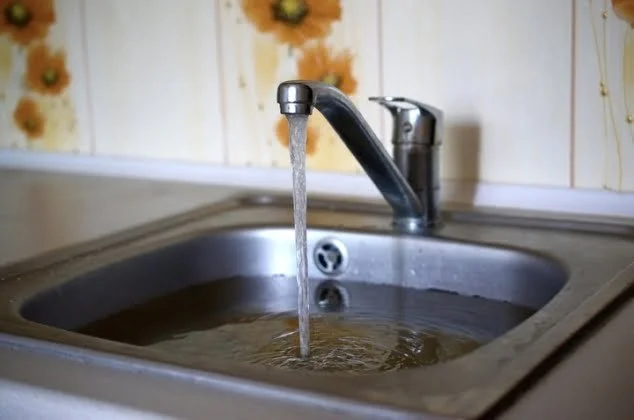
A few simple checks can save you from tearing the whole drain apart when you don’t need to.
- Is the disposal humming or silent? If it hums but doesn’t spin, use the humming guide instead.
- Is the other sink bowl draining? If the other side is also backed up, the clog may be further down the drain line.
- Have you recently ground fibrous foods? Things like celery, onion skins, and corn husks love to wrap and clog.
- Did you pour grease down the drain? Cooled grease can form a sticky plug in the P-trap.
Step-by-Step: How to Fix a Garbage Disposal That Won’t Drain
Work through these steps in order. You’ll go from simplest to more involved so you can stop as soon as the clog clears.
Step 1 — Turn Off Power and Let Water Drop
- Flip the wall switch off and unplug the disposal if it has a plug.
- If the sink is full, use a cup or small container to bail water into a bucket until the level is below the drain opening.
Step 2 — Clear Visible Blockages in the Disposal
Never reach in with your hand.
- Shine a flashlight into the disposal opening.
- Use tongs or long-nose pliers to remove visible food, bones, or foreign objects.
- Rotate the impellers gently with a wooden spoon to loosen buildup.
Step 3 — Try a Plunger (Correctly)
- Use a dedicated sink plunger (not a toilet plunger).
- Block the other sink drain with a stopper or wet rag.
- Add enough water to cover the plunger cup and plunge firmly 10–15 times.
- Check if the water level drops. If it does, run water briefly to see if flow is back to normal.
Cleaning the P-Trap and Drain Line
If your garbage disposal is still not draining after plunging, the clog is often in the P-trap or the horizontal drain arm going into the wall.
What you’ll need
- Bucket or large bowl
- Channel-lock pliers or adjustable wrench
- Old toothbrush or small nylon brush
- Gloves and towels
Step-by-step cleanout
- Place the bucket under the P-trap (the U-shaped pipe under the sink).
- Loosen the slip-nut connections on each side of the trap with pliers.
- Carefully remove the trap and let water and debris drain into the bucket.
- Scrub out sludge and buildup from the trap with the brush.
- Check the horizontal pipe going into the wall and clear any visible clogs.
- Reassemble the trap, hand-tighten the nuts, then snug slightly with pliers.
Turn the water on slowly and check for leaks around the trap connections while the disposal drains. Tighten any joints that seep.
When a Non-Draining Disposal Should Be Replaced
If clogs keep coming back, the inside of the disposal may be badly worn or corroded. Older units can leave food behind instead of grinding it finely, which leads to repeated backups. If your disposal is 8–12+ years old and you’re constantly dealing with standing water, replacement can be the better long-term fix.
Easy Upgrade: InSinkErator Badger 5 (1/2 HP)
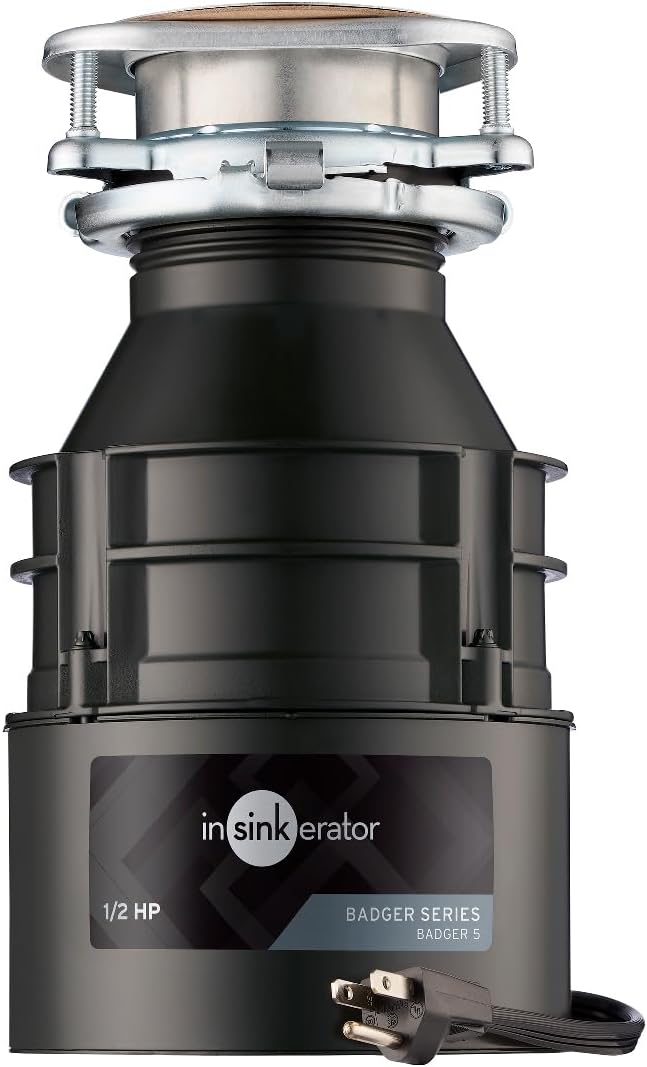
A popular 1/2 HP model that fits many existing mounts. If your current disposal is noisy, slow to drain, or constantly clogging, this is a straightforward swap.
- Designed for typical daily kitchen use
- Works with many existing InSinkErator-style brackets
- Fresh grind components help reduce future clogs
How to Prevent Future Clogs
- Run cold water for 10–15 seconds before and after using the disposal.
- Feed scraps slowly instead of dumping a whole plate at once.
- Avoid fibrous foods like celery, corn husks, and onion skins.
- Keep grease and fats out of the disposal and drain.
- Grind a few ice cubes periodically to help scour the chamber.